














Hydration at the GENERALI BERLIN HALF MARATHON
Expert Ingalena Heuck explains what matters
Former German long-distance runner Ingalena Heuck is one of the most influential voices in Germany’s half marathon scene. In 2010, she won the title at the German Half Marathon Championships and gained many years of experience in elite sports. Alongside her athletic career, she studied sports science and focused intensively on topics such as training, nutrition, and recovery. She later also completed training in nutritional counseling. Today, she shares this knowledge as a running coach, inspiring many people to discover running as part of a healthy lifestyle.
Especially in major races, success is not determined by training alone, but also by the right race-day strategy. One often underestimated factor is fluid intake. In the following interview, Ingalena Heuck explains what runners should pay attention to—particularly at events like the GENERALI BERLIN HALF MARATHON.
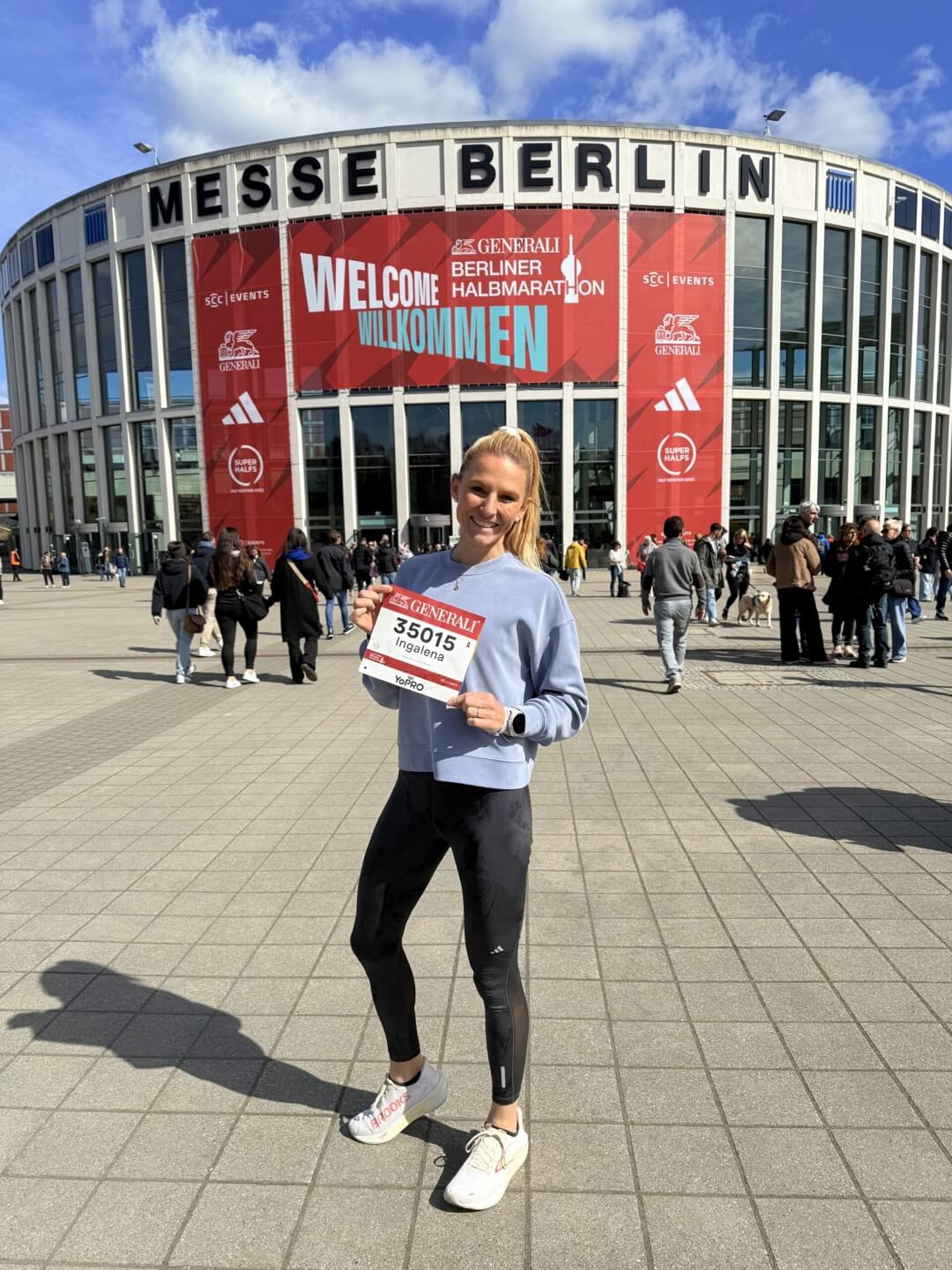
How important is a targeted hydration strategy for a race like the GENERALI BERLIN HALF MARATHON?
Ingalena Heuck: “Absolutely recommended. Even though late March temperatures are not usually extremely high or stressful, the body should be adequately hydrated, and this should ideally be tested during training beforehand.”
How much fluid should runners consume in the days leading up to the race?
Ingalena Heuck: “In the days before the race, it’s important to ensure regular and mindful fluid intake. However, it’s not advisable to drink excessive amounts of water, as the body cannot store huge quantities. It’s best to drink regularly throughout the day and start the morning with a large glass of water. Depending on the individual, about 2–3 liters per day is recommended. Additional electrolyte intake may also be useful before the race.”
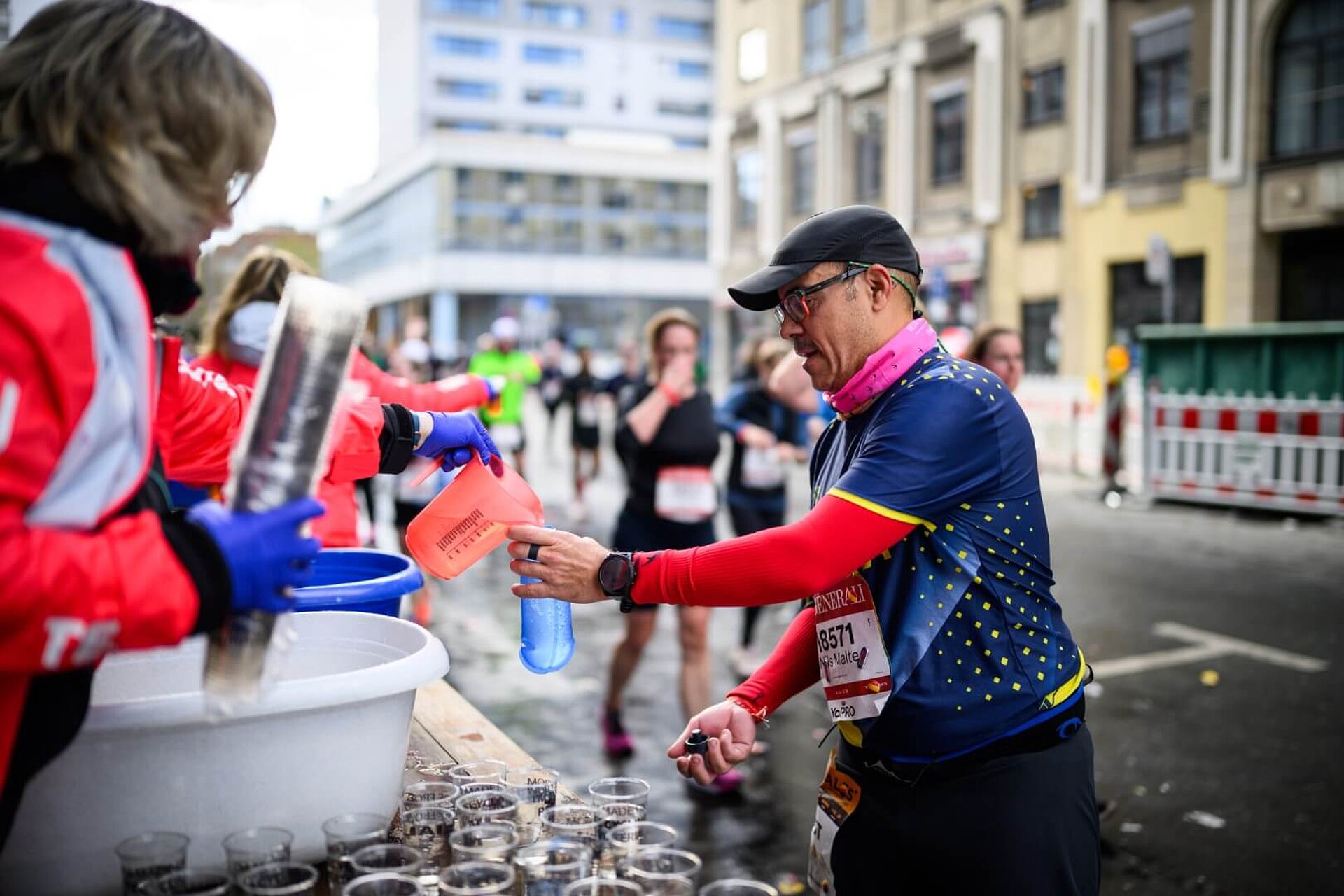
Do you recommend drinking at every aid station—even if you’re not thirsty?
Ingalena Heuck: “Depending on how frequently the stations appear and on the weather, it can make sense to take advantage of each one. In general, I recommend drinking every 5 km, ideally grabbing two cups and aiming to consume at least 200 ml from them.”
Are there differences in hydration needs between ambitious runners and recreational runners?
Ingalena Heuck: “The differences are mainly individual. We all know runners who sweat heavily and others who finish almost dry. It can also be useful to do a sweat test to understand your personal sweat rate. Ultimately, I would rely on a mix of conscious drinking—not waiting until you feel thirsty—and listening to your body.”
Which drinks are best suited for a half marathon? Is water always enough, or when are electrolyte or isotonic drinks useful?
Ingalena Heuck: “For a half marathon, I definitely don’t recommend drinking only water. That might work for some runners who are not racing at a high intensity, but for anyone running at a higher effort level, it’s advisable to consume not only fluids but also carbohydrates and electrolytes—especially sodium. These can be taken in via gels in addition to fluids or through isotonic drinks. A rough guideline is 60–75 g of carbohydrates per hour for recreational runners; elite athletes may consume up to 120 g per hour. Most runners benefit from carbohydrates—2–3 gels are ideal for a half marathon.”
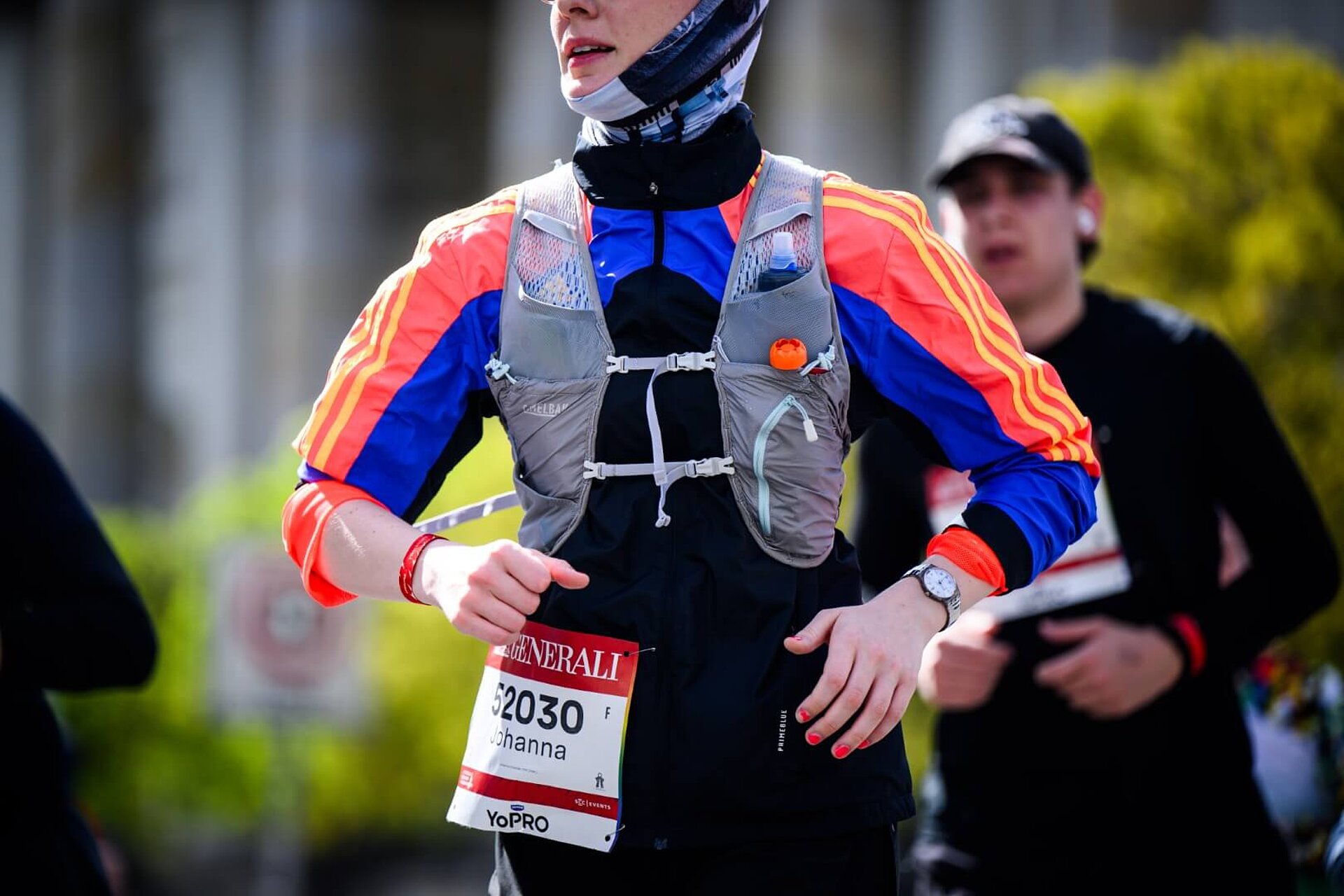
What are the most common mistakes runners make when it comes to hydration?
Ingalena Heuck: “Many runners only start drinking once they feel thirsty—that’s definitely too late. However, it’s also possible to overdo it, so avoid drinking too much plain water. Instead, combine fluids with carbohydrates and electrolytes to support and stabilize mineral balance.”
Is it possible to drink too much?
Ingalena Heuck: “Yes, and it can even be very dangerous if the amounts are excessive. It’s important that fluids also contain minerals. Normally, our body regulates this—we can feel when it’s too much. That’s why it’s important to drink regularly in moderate amounts of about 200–400 ml at a time during the race; this is more tolerable and sustainable.”
How important is drinking after finishing for recovery?
Ingalena Heuck: “It’s definitely important to replenish fluid stores. It’s especially important to combine fluids with carbohydrates—for example, through a recovery drink, apple juice spritzer, non-alcoholic wheat beer, isotonic drinks, or food. However, many people don’t feel like eating immediately after a run, so liquid carbohydrates are often the best way to replenish both energy and fluids.”
What are your key hydration tips for all participants?
Ingalena Heuck: “In short: carry a water bottle in the days before, drink about 1 liter up to race start on race day, then consume 200–400 ml of fluids plus carbohydrates every 5 km, and keep drinking regularly after finishing. And most importantly—enjoy yourself and take good care of your body, that’s when things go best!”